
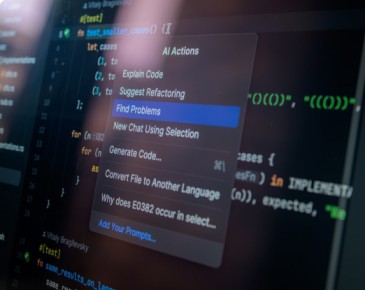
The productivity promise of AI-assisted software development is real. Code generates faster. Boilerplate disappears. Features that once took days can be assembled in hours. For engineering leaders and CTOs, the temptation is to treat this acceleration as a default multiplier — apply AI tools broadly, reduce developer hours, ship faster.
That framing misses the more important question. The question is not whether AI coding tools increase output. They do. The question is what determines whether that output is valuable, maintainable, and aligned with organizational intent. The answer, consistently, comes back to the quality of human direction.
Organizations that have deployed AI-assisted development at scale are beginning to learn a counterintuitive lesson: the more capable the tool, the more consequential the quality of leadership behind it. Vague direction, unstructured workflows, and passive oversight don’t produce mediocre results with AI — they produce complex, sprawling ones. The tool amplifies whatever it receives. When what it receives is ambiguous, ambiguity scales.
This article examines the specific failure patterns that emerge when AI coding tools are deployed without engineering discipline, and offers a structured framework for leaders who want to capture the genuine productivity gains these tools offer — without the technical debt, system complexity, and maintenance burden that unmanaged adoption creates.
The Hidden Cost of Autonomous Generation
Ambiguity Becomes Architecture
In conventional software development, unclear requirements surface slowly. An engineer builds something, a stakeholder reviews it, misalignment is identified, and the work is revised. The feedback loop, while costly, contains the damage.
In AI-assisted development, that feedback loop compresses dramatically — and so does the blast radius of unclear intent. When a developer instructs an AI coding system to “add authentication,” the system does not ask for clarification. It interprets. And because these systems are optimized to produce complete, functional solutions, they interpret expansively. The result may include session management, token refresh logic, role-based access controls, an audit trail, and a configuration interface — all technically coherent, none of it requested, and all of it adding complexity that someone will eventually need to understand, maintain, or unwind.
This is not a flaw in the technology. It is the predictable consequence of deploying a completeness-optimizing system against underspecified inputs. The ambiguity was the problem. The AI simply made it visible — at scale, and at speed.
For engineering leaders, the implication is clear: the quality of AI output is a direct function of the quality of input. Precision in requirements, constraints, and scope boundaries isn’t just good practice in this context. It is the controlling variable.

Scope Creep Without a Paper Trail
Enterprise software development has evolved robust processes for managing scope — change control, stakeholder sign-off, documented decisions. These mechanisms exist because scope expansion is expensive and its effects compound over time. The controls create friction for a reason.
AI-assisted development removes much of that friction, which is part of its appeal. But it also removes the natural checkpoints at which scope decisions get made consciously. Features arrive with enhancements attached. Validation logic expands beyond requirements. Configuration systems acquire options that nobody specified. Each addition is defensible in isolation. The aggregate is a system larger, more complex, and more interconnected than the one that was designed.
The challenge is that this drift is invisible in the moment. It shows up later — in onboarding new engineers who cannot understand the codebase, in debugging sessions where the system’s behavior is surprising, in operational incidents where the complexity of the system makes diagnosis difficult. The cost of scope drift is real; it is simply deferred.
The Debugging Trap
When AI-generated systems break, the instinct is to return to the same tool for the fix. In principle, this is reasonable. In practice, it creates a specific failure pattern.
Asking an AI system to “fix an error” without providing structured context invites exploratory debugging — multiple competing hypotheses pursued in parallel, fixes applied to symptoms rather than root causes, code reorganized around incorrect assumptions. The error may disappear from the surface while the underlying cause persists. Worse, the fix may introduce new complexity, expanding the very codebase that is already difficult to manage.
The root cause of this pattern is a mismatch between what the engineer provides and what the system needs to diagnose accurately. Error messages describe symptoms. AI systems need context: what the system is supposed to do, what the user experienced, where the failure sits in the broader architecture, and — critically — what the boundaries of an acceptable fix are. Without that context, the system optimizes for resolution of the stated symptom, not alignment with organizational intent.
Environment State and the Limits of Code-Level Thinking
There is a category of engineering problem that AI coding tools cannot perceive: environment state. Running servers, occupied ports, stale configuration, session residue from previous builds — these exist outside the code, in the infrastructure layer that the system has no visibility into.
In well-run engineering organizations, environment hygiene is standard practice. Engineers clean up between sessions. State is verified before diagnosis begins. The discipline is so embedded that it rarely needs to be articulated.
AI-assisted development disrupts this without calling attention to the disruption. Developers focused on code generation may allow environment state to accumulate, then attribute environment-related failures to code errors. This misattribution sends diagnostic effort in the wrong direction and extends debugging sessions unnecessarily. The code was never the problem. The environment was. But the tool can only see the code.
A Framework for Disciplined AI-Assisted Development
The failure patterns above are not inevitable. They share a common cause — the absence of structured engineering leadership — and they respond to a common remedy. What follows is a practical framework for organizations deploying AI coding tools in enterprise contexts.

Principle 1: Define Scope Before Generating Code
The most consequential intervention available to engineering leaders is deceptively simple: establish a project guide before any AI session begins. This document does not need to be lengthy. It needs to be precise. At minimum, it should specify the technology stack and version commitments, the folder and module structure, the architectural constraints that reflect organizational standards and operational realities, and — with particular emphasis — what the current phase explicitly does not include.
That last element deserves particular attention. Defining what will not be built is as important as defining what will. Without explicit exclusions, AI systems will fill specification gaps with capability. A statement as simple as “no caching layer in this phase,” “authentication is handled externally,” or “admin interface is out of scope” has measurable impact on output complexity. It tells the system where to stop.
This guide becomes the stable anchor for every session. It eliminates repetitive context-setting, reduces drift between sessions, and creates a shared reference point for reviewing whether output aligns with organizational intent.
Principle 2: Separate Development Phases
The absence of natural friction in AI-assisted development creates a subtle trap: build, debug, refactor, and optimize collapse into a single continuous stream. The developer generates a feature, notices something that could be cleaner, requests a refactor mid-session, spots a performance opportunity, and asks for an optimization — all without pausing. The context of changes becomes unmanageable. Cause-and-effect relationships obscure. When something breaks, the surface area of investigation is enormous.
Disciplined AI development treats these phases as distinct and sequential. Build: implement the specified feature within defined constraints. Stop. Debug: identify and resolve a specific, isolated failure. Stop. Refactor: improve the structure of working, validated code. Stop. Optimize: improve the performance of validated, well-structured code. Stop.
This sequencing disciplines the context of each session and dramatically simplifies diagnosis when problems arise. When a defect appears in code that was built cleanly in an isolated session, the investigation begins with a manageable scope. The principle is not new — it reflects sound engineering practice. What is new is the need to apply it explicitly in an environment where the tool’s fluency makes phase-blurring feel costless.
Principle 3: Build Incrementally, Validate Continuously
Requesting complete modules or features in a single generation is an understandable optimization. It is also a risk. When a fully generated module contains a defect, the debugging context is large, dependencies are established, and isolating the root cause requires comprehending the entire generated structure.
The alternative is incremental development with explicit validation gates. Define the data schema and validate it. Implement the API endpoint and validate it against the schema. Add input validation and verify it independently. Connect the interface component and test the integration. Each unit is confirmed correct before the next begins.
This pattern does more than reduce debugging complexity. It keeps the AI’s working context clean and grounded. Each step begins with a verified state. The system is not reasoning across accumulated uncertainty. When a step fails, the failure surface is small and the fix is contained. Cascading failures — where a defect in one component propagates through subsequent generated code — are significantly reduced.
Principle 4: Structure Diagnostic Requests
Perhaps the most direct improvement available in day-to-day AI-assisted development is a change in how engineers request fixes. The instruction “fix this error” produces exploratory solutions. It invites the system to range across possible causes and apply whatever approach resolves the surface symptom.
A more structured request produces more precise output. Effective diagnostic requests describe the symptom in functional terms — what the user experiences or what the system fails to do — rather than only providing technical error messages. They specify what correct behavior looks like. They ask for a diagnosis and a proposed approach before any code changes. And they define the boundaries of an acceptable fix: which files may change, what should not be touched, and what level of structural change is appropriate for the problem.
This approach reflects how experienced engineering managers run debugging conversations with their teams. The engineer is not asked to fix the problem unilaterally. They are asked to explain what they believe is happening, propose an approach, and receive direction before making changes. The same discipline produces the same improvement in output quality when applied to AI systems.
Principle 5: Manage Context as a Resource
AI coding systems carry context forward across a session. In the short term, this continuity is useful — it reduces repetition and allows the system to reason across accumulated decisions. Over time, unmanaged context becomes a liability. Long sessions accumulate stale constraints, resolved errors, superseded decisions, and intermediate states that are no longer relevant. The system continues to reason across this history, applying outdated context to current problems. Output quality degrades. Responses become longer and less precise. Solutions address problems that no longer exist.
The discipline is to treat context as a managed resource rather than a default setting. When shifting phases, completing a feature, or encountering persistent imprecision, reset the session. Before resetting, summarize the current state: what has been built, what has been validated, what decisions have been made and why, and what remains open. Start the new session anchored to that summary.
Context resets feel counterintuitive. Continuity seems like it should be an asset. In practice, structured resets with explicit summaries outperform long continuous sessions for complex engineering work.
Principle 6: Retain Ownership of Environment State
This principle is operational, not architectural, but its impact on development efficiency is significant. Infrastructure state — server lifecycles, port management, temporary files, session residue — must remain under explicit human control.
AI coding systems operate at the code level. They cannot observe or manage the environment in which that code runs. When environment state is not actively managed, errors that originate in the environment are misattributed to the code, and diagnostic effort is wasted.
Establishing a pre-session routine that verifies known services are stopped, ports are clear, and state is at a known baseline takes minimal time and eliminates an entire category of false-positive debugging. More importantly, the responsibility for infrastructure state should be explicit — not something that happens incidentally during a code generation session, but a deliberate act that precedes technical work.
The Organizational Implication
The framework above is practical. Its deeper implication is strategic.
AI coding tools do not reduce the value of engineering judgment. They increase the consequences of its presence or absence. When experienced architects and senior engineers bring clear requirements, explicit constraints, and structured workflows to AI-assisted development, productivity gains are substantial and sustainable. The output reflects organizational standards. Systems are maintainable. Complexity is managed.
When the same tools are deployed without that discipline — by engineers who lack the pattern recognition to identify when scope is drifting, when generated code violates architectural principles, or when a fix is addressing a symptom rather than a cause — the output is more complex, harder to maintain, and less aligned with organizational needs than conventionally developed software. The tool accelerated the production of the wrong thing.
This has direct implications for how organizations structure AI-assisted development practices. The engineers who should be closest to these tools are not those with the lightest oversight requirements. They are those with the deepest judgment — senior engineers and architects who can define scope precisely, recognize drift early, and encode the organizational knowledge that doesn’t appear in any specification document but shapes every architectural decision.
Organizations that deploy AI coding tools broadly, without a framework for structured direction, will find that the productivity gains are real but fragile. Technical debt accumulates faster. Systems become complex before they become stable. The acceleration that was expected to reduce engineering cost eventually requires significant investment to address what was built without sufficient discipline.
The more durable approach is to invest first in the practices that make AI-assisted development reliable: clear scope definition, phased development, incremental validation, structured diagnostics, and deliberate context management. These practices are not constraints on AI capability. They are the conditions under which AI capability produces lasting value.

Conclusion
The conversation about AI in software development has focused heavily on what these tools can generate. The more important question, for engineering leaders, is what conditions produce generation that is useful.
The answer is familiar to anyone who has led complex engineering engagements: clarity of direction, discipline of process, and ownership of outcomes. AI coding tools change the speed at which software is produced. They do not change the principles that determine whether software is worth producing.
Organizations that recognize this — and build their AI-assisted development practices accordingly — will realize the genuine productivity advantages these tools offer. Those that treat AI generation as a substitute for engineering leadership will find that they have accelerated their way into complexity they didn’t intend to build and will eventually need to unwind.
The leverage is real. So is the responsibility that comes with it.